
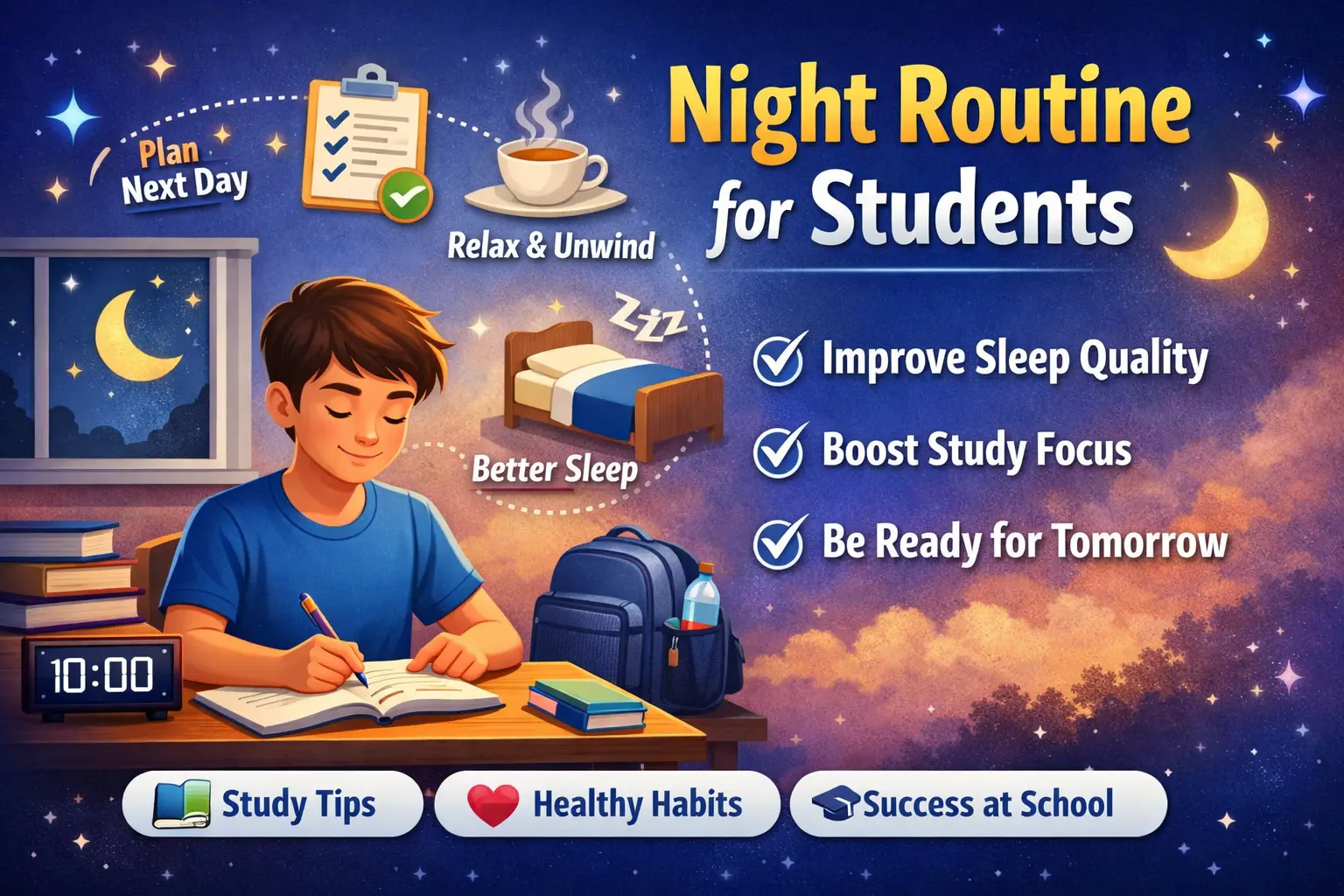
Key Takeaways: Night Routine for Students
- A consistent night routine helps students improve sleep quality and academic focus.
- Students should aim for 8–10 hours of sleep (teenagers) or 7–9 hours (college students).
- A good routine includes homework, relaxing activities, and preparing for the next day.
- Avoid screens, caffeine, and heavy meals close to bedtime.
- Preparing school items before sleep reduces morning stress.
- Relaxation habits like journaling or reading help calm the mind before bed.
Students today face a common problem: busy days and restless nights. Homework, exams, social media, gaming, and stress can easily push bedtime later and later. Many students stay awake scrolling on their phones or studying until midnight, only to wake up tired the next morning. This cycle can harm concentration, memory, and academic performance.
A structured night routine for students can solve this problem. A healthy routine helps the body relax, improves sleep quality, and prepares the mind for the next day. When students follow consistent nighttime habits, they feel more productive, focused, and energized during school or college.
In this guide, you will learn the best nighttime routine for students, including a practical schedule, study tips, sleep science, and proven habits that successful students follow.
What Is a Night Routine for Students?
A night routine for students is a set of habits students follow every evening before going to bed to improve sleep, productivity, and mental health.
A good student bedtime routine usually includes:
- finishing homework
- preparing for the next day
- relaxing activities
- limiting screen time
- skincare at night
- going to bed at a consistent time
These habits support sleep hygiene and circadian rhythm, which helps students sleep better and wake up refreshed.
Why Students Need a Night Routine
A consistent nighttime routine for students offers several benefits. Many students notice that once they start following a consistent night routine, they wake up feeling more refreshed and focused. Small habits like preparing school items before bed or limiting screen time can significantly improve both sleep quality and morning productivity.
1. Better Academic Performance
Sleep plays an important role in memory and learning. Sleep helps the brain consolidate memories and process information learned during the day.
2. Improved Focus and Productivity
A good routine supports study productivity and helps students stay alert during classes.
3. Higher Energy Levels
Students who sleep well feel less tired and more motivated.
4. Better Mental Health
A structured routine can reduce stress, anxiety, and overthinking.
Expert Insight
Sleep researchers emphasize the importance of routine.
“Consistent sleep schedules help regulate circadian rhythms and improve cognitive performance.”
When students go to bed at the same time every night, their bodies naturally prepare for sleep.
7 Steps for the Perfect Night Routine for Students
Here is a simple step-by-step night routine for school and college students.
1. Finish Homework Early
Try to complete homework and assignments at least 1–2 hours before bedtime.
Late-night studying can increase stress and make it harder to sleep.
Tip:
Use the evening hours for revision instead of learning new topics.
2. Eat a Light Dinner
Heavy meals late at night can disturb sleep.
A healthy dinner should include:
- protein
- vegetables
- whole grains
Avoid sugary foods before bedtime.
3. Limit Caffeine in the Evening
Caffeine can stay in the body for 6–8 hours.
Students should avoid:
- coffee
- energy drinks
- soda
after the evening.
4. Reduce Screen Time
Phones, laptops, and tablets screens emit blue light that can suppress melatonin, the hormone that helps regulate sleep.
Try a digital detox at least 30–60 minutes before bed.
Instead of scrolling social media, try:
- reading a book
- listening to music
- stretching
5. Relax Before Bed
Relaxation helps the brain transition from study mode to sleep mode.
Healthy nighttime activities include:
- journaling
- meditation
- breathing exercises
- reading
6. Prepare for Tomorrow
Successful students prepare for the next day before sleeping.
This reduces morning stress and saves time.
7. Sleep on Time
Go to bed at the same time every night.
A consistent bedtime supports the body’s circadian rhythm, improving sleep quality.
Also read: night routine ideas
Night Routine Timeline
Example:
7 PM Dinner
8 PM Homework
9 PM Prepare for tomorrow
9:30 PM Relax
10 PM Hygiene routine
10:30 PM Sleep
What Happens When Students Don’t Follow a Night Routine?
Students who regularly sleep late may experience several problems.
Common effects include:
- difficulty concentrating in class
- reduced memory retention
- lower academic performance
- daytime fatigue
- mood changes or irritability
Lack of sleep can also affect the brain’s ability to process information and solve problems.
Over time, irregular sleep schedules can disrupt the body’s natural circadian rhythm, making it harder to fall asleep and wake up on time.
“Students who maintain consistent sleep schedules often show better academic performance and cognitive function.”
— Sleep health research insight
Night Routine for School Students vs College Students
Students at different education levels often have different schedules.
Night Routine for School Students
School students usually need a routine that supports:
- homework completion
- early bedtime
- consistent wake-up time for school
A typical school night routine may include:
- homework after dinner
- preparing the school bag
- relaxing before bed
- sleeping by 9:30–10:30 PM
Night Routine for College Students
College students often have more flexible schedules.
A healthy college night routine may include:
- reviewing lecture notes
- planning assignments
- limiting late-night screen time
- sleeping at a consistent time
Even with flexible schedules, consistent sleep is still important for focus and academic success.
7 Steps for a Perfect Student Night Routine
- Finish homework early
- Eat a healthy dinner
- Avoid caffeine in the evening
- Reduce screen time
- Relax before bed
- Prepare for tomorrow
- Sleep at a consistent time
Best Night Routine Schedule for Students
A schedule makes routines easier to follow.
| Time | Activity |
|---|---|
| 7:00 PM | Dinner |
| 7:30 PM | Homework or revision |
| 9:00 PM | Prepare school bag and tasks |
| 9:30 PM | Relaxing activity |
| 10:00 PM | Hygiene routine |
| 10:30 PM | Sleep |
This student sleep schedule supports both productivity and rest.
Night Study Routine for Students
Many students prefer studying at night. A night study routine for students should focus on effective learning rather than long study hours.
Best Night Study Strategy
- Start with light revision
- Practice questions or exercises
- Avoid learning new difficult topics
- Use short breaks every 30–40 minutes
Night hours are best used for reviewing material learned during the day.
Why Students Delay Sleep (Bedtime Procrastination)
Many students know they should sleep early but still stay awake.
This behavior is called bedtime procrastination.
It happens when someone delays sleep even though they feel tired.
Common Causes
- social media scrolling
- gaming
- late-night studying
- stress and anxiety
- watching videos
Bedtime procrastination leads to:
- fatigue
- poor concentration
- lower academic performance
Reducing phone use before bed is one of the best ways to solve this problem.
Things Successful Students Do Before Bed
Highly productive students often follow small habits that prepare them for the next day.
Examples include:
- packing their school bag
- checking tomorrow’s schedule
- reviewing class notes
- planning tasks
- setting alarms
These habits improve time management and study productivity.
How to Calm Your Mind Before Sleep
Students often struggle with exam stress and overthinking.
A calm mind leads to better sleep.
Try these simple techniques.
Journaling
Write down thoughts or tasks for the next day.
Breathing Exercises
Slow breathing helps relax the nervous system.
Gratitude Practice
Think about three positive things from the day.
Meditation
Even 5 minutes of meditation can reduce stress.
How Much Sleep Do Students Need?
According to sleep health research and organizations like the National Sleep Foundation, teenagers typically need 8–10 hours of sleep, while most college students and young adults benefit from 7–9 hours of sleep per night.
| Student Type | Recommended Sleep |
|---|---|
| Teenagers | 8–10 hours |
| College students | 7–9 hours |
Getting enough sleep improves:
- concentration
- memory
- mood
- academic performance
Common Mistakes Students Make at Night
What is Bedtime Procrastination?
Bedtime procrastination happens when students delay going to sleep even though they feel tired. This often happens due to social media scrolling, gaming, or watching videos late at night. Over time, this habit can reduce sleep quality, lower energy levels, and affect academic performance.
Many students unknowingly follow habits that damage sleep.
1. Revenge Bedtime Procrastination
Students stay awake late to enjoy free time after a busy day.
2. Using Phone in Bed
Scrolling social media keeps the brain active.
3. Studying Until 2 AM
Late-night cramming reduces sleep and memory retention.
4. Drinking Caffeine Late
Caffeine disrupts sleep cycles.
Avoid these habits for a healthier student bedtime routine.
Digital Detox for Students
A digital detox before bedtime improves sleep quality.
Try these strategies:
- turn off notifications
- charge phone away from bed
- avoid social media after 9 PM
- read a book instead of watching videos
Reducing screen time supports healthy sleep hygiene.
Night Routine for Exam Weeks
During exams, students often stay up late studying.
Instead of sacrificing sleep, try this routine:
- revise notes early evening
- practice questions
- review key concepts
- sleep at least 7 hours
Sleep helps the brain store information and improve recall during exams.
Night Routine for Online Learning Students
Students studying online often spend long hours on screens.
To improve sleep:
- take breaks from screens
- use blue light filters
- stop studying 1 hour before bed
- stretch or walk before bedtime
Night Routine for Hostel or Dorm Students
Students living in dorms may struggle with noise or distractions.
Helpful tips include:
- using earplugs
- creating a small bedtime ritual
- keeping lights dim
- avoiding late-night group activities
Night Routine Checklist for Students
Use this simple checklist.
✔ Finished homework
✔ Packed school bag
✔ Reviewed notes
✔ Avoided caffeine
✔ Limited phone use
✔ Relaxed before bed
✔ Slept on time
This checklist helps maintain a consistent school night routine.
Student Routine Example (Case Study)
Sarah, a college student, struggled with low energy and poor grades during her first semester.
She often studied until 2 AM and woke up tired for classes.
After adopting a structured night routine for college students, she changed her habits.
Her routine included:
- studying earlier in the evening
- turning off her phone at 9:30 PM
- journaling before bed
- sleeping at 10:30 PM
Within a few weeks, Sarah noticed:
- better concentration
- improved memory
- higher exam scores
A simple routine made a huge difference.
Tips to Stick to a Night Routine
Creating a routine is easy. Following it consistently is the challenge.
Try these strategies.
Set an Alarm Reminder
Set a bedtime reminder on your phone.
Use Habit Stacking
Connect new habits with existing ones.
Example:
brush teeth → journaling → sleep.
Keep a Consistent Schedule
Sleep and wake up at the same time daily.
Consistency strengthens your circadian rhythm.
Student Night Routine Checklist
- ☑ Finish homework and revision
- ☑ Eat a healthy dinner
- ☑ Avoid caffeine late in the evening
- ☑ Reduce screen time before bed
- ☑ Prepare school bag and clothes for tomorrow
- ☑ Practice relaxation (reading, journaling, meditation)
- ☑ Brush teeth and complete hygiene routine
- ☑ Go to bed at a consistent time
Conclusion
A healthy night routine for students is one of the most powerful habits for improving sleep, productivity, and academic success. Many students struggle with late-night studying, social media distractions, and stress, which can lead to poor sleep and lower focus during the day. Creating a simple nighttime routine helps students relax, prepare for tomorrow, and maintain a healthy balance between school and rest.
From finishing homework early and limiting screen time to practicing relaxation techniques and preparing for the next day, these small habits can make a big difference. Students who follow a consistent routine often experience better concentration, improved memory, and higher energy levels in school or college.
If you want better grades, stronger focus, and healthier sleep, start building your student bedtime routine tonight. Even small changes can lead to big improvements in your daily life and academic performance.

